
The Medmastery Show: Episode #2 with Bryan Vartabedian, How to excel as a doctor in the digital age
If you want to learn how to be successful as a clinician in the digital age, don't miss this 30-minute interview with my good friend Dr Bryan Vartabedian!
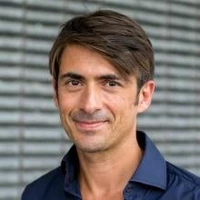
Facts about Bryan Vartabedian
- He's probably THE most influential physician blogger on the web
- His blog 33charts.com has been cited as an example of 21st century thought leadership and was recently chosen to be archived in its entirety in the National Library of Medicine
- He's a pediatrician gastroenterologist from Baylor College of Medicine
- He has over 21 000 followers on twitter (follow him at @Doctor_V)
- He's an advisor to Mayo Clinic's Center for Social Media
- He currently serves as a Visiting Professor at Rice University where he has co-taught Medicine in the Age of Networked Intelligence
- And the list of accomplishments goes on and on
In this interview we'll uncover several nuggets of wisdom:
- How medical students can build a brand for themselves
- What are some key mindsets that will help you to be successful and happy as a doctor
- The best social media tools for doctors
- And much, much more
Recommended books and tools
Note: Some of these links are affiliate links.
Getting Things Done, by David Allen
Linchpin, by Seth Godin
The Creative Destruction of Medicine, by Eric J. Topol
- Listen to our interview with Eric Topol in Episode 1
The two medical students that were referred to in the interview
Roheet Kakaday: @thebiopsy
Amol Utrankar: @AmolUtrankar
PS: I hope you enjoy this episode. Let me know what you think of it via our contact form!
Expand your knowledge with these accredited courses
Find and save us as one of your favorite medical podcasts
Listen and review on your preferred podcast streaming platform.
Listen on Spotify
Listen on Apple Podcasts
Episode transcript
This transcript was auto-generated. If you notice an error, please report it to us via our contact form.
Franz [00:00:00]:
Welcome to the Medmastery Show. My name is Franz Wiesbauer, internist with a specialization in cardiology. Each week, we bring you an inspiring person or message to help you unlock your full potential. Thanks for spending some time with me today. Now let the show begin.
Franz [00:00:24]:
Welcome everyone to episode 2 of the Medmastery Show. Today, I'll be interviewing my good friend, pediatrician, and gastroenterologist, doctor Brian Bartobedian. Brian and I have been friends now for a couple of years. We met at the Doctors 2.0 conference in Paris where we were both invited as speakers. Brian is considered one of healthcare's most influential voices on technology and medicine. He's probably one of the doctors on Twitter with the largest following. There, he's known under the pseudonym doctor v. One of the things that make him so unique is his understanding of how new media like Facebook and Twitter can be leveraged by doctors and medical students.
Franz [00:01:05]:
It's probably no exaggeration to say that Brian is somewhat of an online physician celebrity. Many prestigious institutions seek out his expertise and knowledge. So he's on the advisory board of Stanford's Medicine X Conference and the Mayo Clinic Center For Social Media. Also, he's a founding adviser to the healthcare track at South by Southwest Interactive Festival. You can find him quoted in outlets such as The Wall Street Journal, The New York Times, US News and World Report, and CNN. You can check out Brian's writing at his blog 33charts.com which has been cited as an example of 21st century thought leadership and was chosen to be archived in its entirety in the National Library of Medicine. Not to forget, he's an assistant professor of pediatrics at Baylor College of Medicine where he takes care of kids bowels at the largest US Children's Hospital. As you'll hear in the interview Brian is a bit sick but we absolutely wanted to do the interview anyway so I hope you don't mind.
Franz [00:02:10]:
Let's jump right into it. Thanks so much, Brian, for taking the time.
Bryan [00:02:14]:
Yeah. It's great to be here, Franz. Thanks for having me on.
Franz [00:02:16]:
It's always such an inspiration to talk to you, Brian. You're such an incredible forward thinker, which makes me wonder how did that come about? What ignited your interest in new media and medicine?
Bryan [00:02:27]:
Well, I guess I kinda got started in this, back when 2006, a book called Colic Solved. And at the time, there was no social media, and every author I was told needs to have a blog. And so I launched a blog and shortly after launching that blog, I intended just to sell books with this blog and I realized very shortly that I had a platform for the world and I realized this, this new capacity that we now have to be authors and self publishers, is incredibly powerful for me, you know, as an individual and as a physician. And so the power that comes with that has been just very
Franz [00:03:06]:
exciting. Was that 33 charts already or was that a different blog?
Bryan [00:03:11]:
No. That was Parenting Solved. It was a blog again that I just said centered around my book, Colic Solved. And so, I worked worked on that for a couple years, got into social media, saw more and more doctors, facing issues and problems in the social space, and that's when I launched 33 Charts.
Franz [00:03:30]:
Nice. I'd like to talk a bit about the doctor of the future and the skills that we'll all need as MDs in the future. You're the co creator of the Medical Futures Laboratory at Rice University. Do you want to give our listeners some background information on this initiative, please?
Bryan [00:03:47]:
Yeah. The Medical Futures Lab is a collaborative project based out of the Texas Medical Center in Houston, Texas. It's a collaboration between Baylor College of Medicine, Rice University, and the University of Texas Health Science Center. And, it is something of a think tank that uses kind of an interdisciplinary approach to problems. We have, artists, literary people, physicians, and, non traditional people getting together to try to solve problems. And we offer a variety of courses to our Rice undergraduates that involve this this kind of broad horizontal thinking. And so, it's kind of a thinking space.
Franz [00:04:28]:
And is that intended to train doctors also or future or future MDs?
Bryan [00:04:33]:
Well, you know, essentially, Franz, because it's really, the courses that we offer through the medical futures lab at Rice University are for undergraduates. Most of them are pre med, but the, Association of American Medical Colleges has become very, very interested in our project, and they're looking very closely, at how we can take some of these some of this interdisciplinary thinking and bring it bring it into medicine. Because Franz, I truly believe that a lot of the problems that we face in medicine could be solved, outside of our silo. Do you know what I mean?
Franz [00:05:06]:
Yeah. Yeah. Sure. Like thinking out out of the box.
Bryan [00:05:10]:
Yeah. Yeah. Exactly. And so, you know, there there are there are, you know, the consumer industry, for example, has solved a lot of the problems of customer service. And in medicine, we don't look at that or pay attention to it when in fact, a lot of these basic issues that we face in the clinic have been solved.
Franz [00:05:25]:
Oh, that's awesome. I would love to take part in in in such a course. I mean one thing that always strikes me is that we can only hypothesize about the future of medicine but we cannot really be certain. Plus we hardly know what the future will look like in 5 years yet we're meant to be educating our doctors for a future that lies 10, 20 maybe 30 years down the road which seems so crazy and for me this raises the question really, what skills should a young doctor or medical student acquire that will not be taken care of by technology in the future? I mean, what skills will still be relevant in 15 years, let's say? Any thoughts on that?
Bryan [00:06:06]:
No. You know, this is the big challenge that medical education is facing, Franz. You know, traditionally, if you look at the 20th century, things were very static. You went to medical school, in 2 years you learned everything there was to know, and then you spent the rest of your career applying that knowledge. You know, we're truly experiencing now, you know, a crisis of knowledge and, I think going forward, it's gonna require a totally different, set of skills. When Eric Topol was speaking at Baylor a couple years back, somebody asked what's the number one skill set of a physician of the future? And he aptly said, flexibility. If things are changing so quickly, medical education and some of the things that you're doing, Franz, with your with your work will be will become so critical in the future. So so knowing how to educate doctors today really requires some understanding what the doctor of the future will need will need to do.
Bryan [00:07:02]:
And it's very, very hard to say. What's clear is that with with this knowledge explosion, instead of students learning and memorizing what they need to know, this generation of doctors coming out is going to be the 1st generation that will access their information instead of managing it. Mhmm. For example, in medical education, we're debating the whole idea. How much does a doctor need to memorize? Like Franz, like you and I did in medical school and how much can they access? Network, being able to work within a network, interdisciplinary thinking, working in teams, I think is gonna be a key element, in the future.
Franz [00:07:38]:
Yeah. I mean, one thing that usually helps me when I kind of like, think about these skills is I I usually put medical skills into 1 of 3 categories. When it comes to their usefulness in the future, I would say category 1 would be useful now but not in the future and these are the skills that skills and tasks that will be taken care of by technology. Things that fall into that category are let's say learning dosages by heart because Google Glass will give us correct dosages almost immediately maybe in the future or maybe auscultation because a portable echo device will give us more accurate information. I I usually like to call them dinosaur skills because they might actually become extinct and those are the skills that we might not focus our attention on that much anymore as opposed to in the past. Then category 2 would be skills that are not useful now but will become useful in the future and we can only hypothesize about these, but we can't really educate our doctors in them, and I usually call them the the great unknown skills and then there's, category 3 which would be skills that are useful now and that will also be useful in the future. I like to think of those skills as meta skills like communicating with patients, learning how to learn, the discrimination between important and unimportant information and the like. And I really think, when I think of educating doctors for this unknown future is that I would really love to pick out and find out what those meta skills are.
Franz [00:09:18]:
These very important skills that we need now and also in the future. Can you relate to that?
Bryan [00:09:25]:
Yeah. You know I think as you were talking I was thinking that so much of, I guess this is in category 2 maybe. So much of what we have traditionally done as physicians is now being replaced by machines, and I think that a lot of these you you talked about communication skills and and whatnot. I think they're gonna become increasingly important going forward because as machines take away more and more of what we do by hand, we're gonna be left with this human interaction and, helping patients understand and make sense of all this advanced technology that's out there.
Franz [00:10:02]:
Yeah. Absolutely. You know, this show is all about deconstructing medical education and one important part is finding the right teachers and mentors. Since you're such an expert on all things related to online communication medicine, how can a young person use social media or let's say the Internet in general in order to connect with a potential mentor? Let's say they've identified a well known researcher or doctor that they would like to work with, what's the best way to reach out to that person and what tools could they use?
Bryan [00:10:36]:
Well, that's a great question, Franz, because for the first time in in in history, we have the capacity to communicate and engage with a global network of physicians. And so we have at our fingertips, anyone across the globe who is also engaged in the public conversation. And so I don't know how to answer your question except to say that, tools like Twitter and other public platforms allow us to create a human signal and listen to all these people with one great signal or stream, and that also allows us to talk back and engage engage back with them. And, oftentimes that kind of visibility and and and short term dialogue that we have on Twitter oftentimes leads to a longer lasting relationship. As I've always said, being visible in the public space has created many opportunities for me. It's allowed me to meet people, and this applies to mentors too. You can follow these people, listen to them, and then, ultimately engage with them.
Franz [00:11:39]:
What would be a strategy of how to engage with them? Because I feel like a lot of people, really don't take the right approach. They just follow people on Twitter maybe and then they're contacting them with a pitch where they're asking immediately something that the mentor might do for them. Right? So I which which usually doesn't hit a sweet spot because people who are potential mentors are usually very busy and they have a lot of requests on their table. Any any idea, like, what what were the most fruitful, strategies for you personally, to connect with people online? Like, how what strategies could people, apply that you've used?
Bryan [00:12:20]:
Well, you know, the issue of mentors, Franz, is is complicated because it really requires that the the mentor themselves be willing to sort of make a commitment to you. Right? So saying is a tall order, because you don't know if that person is willing to be a mentor. But there are variety of degrees of people who can influence you, and I think that, as I suggested, being yourself a good curator, creating great content or if we say on Twitter, bringing real value to, the Twitter space is gonna make you visible and appealing to other people and that will make them, wanting willing and wanting to talk to you. I mean, I've reached out to many people, just as you just suggested, and there's sometimes no other way to do it. I don't know if that answers your question. I don't know. What do you feel about it? Do you think there's a way to do it?
Franz [00:13:13]:
Well, yeah. You know, I think, since a lot of people are listening are are still medical students, I feel like, since we've been friends on Twitter also for for quite some time I mean I've seen medical students who are really good at curating information on Twitter and I I can't remember all of their names, but we they're both friends, friends of ours. And so they, even as medical students, they curated information that was extremely relevant for people like like you, me, Eric Topol, or whomever. And and that way, they kind of, like, made a name for themselves. Do you know who I'm talking about? Like, I think you even tweeted about this one student who then when he graduated from medical school, he said, oh, congratulations. He finally, became an MD. Can you remember?
Bryan [00:14:05]:
Well, there's, who is a graduate of our medical futures lab. There's Rohit, Rohit Kakadib at the University of Oregon. His his story is very interesting because he, he leveraged his blog and his public presence as a means of trying to get the attention Whereas most medical students, at least in the US, pre med students make every effort to be invisible in the public space. They leveled their Facebook page. They're afraid to make anything public because they think someone's gonna think negatively of them. When in fact, we have to see this this capacity to write and publish and make things as an opportunity for us to get discovered and to be visible.
Franz [00:14:49]:
Oh, that's a great that's a great case study. I I have to get in touch with him.
Bryan [00:14:54]:
Yeah. In fact, he'd be a great, we can go offline. I'll give you his contact information. This is mindset is just so forward thinking. But I think going forward, there's been some discussion that, medical school admissions in the future, may potentially involve looking at an individual's digital footprint to get a better understanding of who they are.
Franz [00:15:15]:
Mhmm. Yeah. If you were forced to use only one social media
Bryan [00:15:26]:
it's probably the most widely accepted, social platform by physicians.
Franz [00:15:32]:
You think more than Facebook?
Bryan [00:15:34]:
For physicians, I think, yeah. I think there's, I've got some data on that, that's, yeah. I think Twitter is just more widely accepted.
Franz [00:15:43]:
Mhmm.
Bryan [00:15:44]:
Unless you have something conflicting, but I spend very little time on Facebook myself. The privacy settings are hard to understand. I think Twitter is, it's a little easier to sort of create a nice signal for yourself. So that probably probably for me, it would be Twitter, but I'm biased because I I like it so much. Facebook is reasonable.
Franz [00:16:04]:
How about, LinkedIn?
Bryan [00:16:08]:
Yeah. LinkedIn. Yeah. LinkedIn is great. You know, when we think about our digital footprint as physicians, LinkedIn is is an absolute best place for young physicians to start. It's a place to create what I call your public facing profile which is your basic bio, and so you can put your medical education history, a nice narrative bio and a great picture and it's, at least in the United States, that's where a lot of people start when they wanna wanna learn about something. So but the problem is Twitter's not a great place for engagement. Right? Interestingly, Twitter just this year added the option for blogging, so you can do some limited content production on LinkedIn as well.
Bryan [00:16:49]:
So LinkedIn is it's a great platform.
Franz [00:16:51]:
Yeah. Absolutely. Absolutely. I've been experimenting with it a lot in in the in the past months and it's I I really like it. Can you recommend any productivity apps or techniques like getting things done, that make your day in the clinic easier?
Bryan [00:17:08]:
Yeah. Well, of course, the the challenge, Franz, with any of these applications, many of them are cloud based, and at least in the United States, when it when it comes to productivity in a clinical setting, if it involves protected health information, we really can't use these. With that said, I live and die by a program called Evernote, which is basically an application that allows you to store content It's kind of a workspace and so everything I do begins and ends on Evernote. In terms of Getting Things Done, which is a great book by David Allen that was written about a decade ago. It's called GTD, which is a system for organization and productivity. It's a system I use to organize myself, and I use an application called OmniFocus, which is very tightly connected to the the methods of getting things done. So those are 2 that I'd recommend.
Franz [00:18:09]:
Yeah. Yeah. I I love getting things done. I it's it's an approach that I also use for organizing myself.
Bryan [00:18:15]:
I will add for let me just say something about it. OmniFocus and GTD, they're great for, like, operational things, for tasks and projects. It it kind of fails if you're a creative type. It doesn't do well in that situation. Like as myself as a writer or someone who writes things, it's not really great for that.
Franz [00:18:37]:
Yeah. Yeah. I mean, a lot of people have modified, the GTT, approach for for their circumstances. So I think they're like Leo Babauta created a variation called send to done and and I've always been intrigued by the, you know, the idea of creating a variation of getting things done for medicine, you know, like something that's that's, that fits the way we work in the clinic. I think this could be a huge, this could be really huge, if if you came up with a good productivity system for doctors.
Bryan [00:19:16]:
That's our next company, Franz.
Franz [00:19:18]:
Yes. Absolutely. Can you and what about, any book recommendations, any must read books for, that can inspire young doctors?
Bryan [00:19:29]:
Well, you know, it's interesting. When I talk to premedical students in the United States here, docs, or college students who are looking to go into medicine, I'm absolutely amazed at the number of, college students who really don't understand where the future of medicine is heading. And, to understand that, I think probably the best go to source would be Eric Topol's Creative Destruction of Medicine. It creates a great picture of where medicine is headed in terms of the empowered patient and the digital doctor. You know, I mentioned back also, about this concept of flexibility and, of being a skill of the future physician. Seth Godin has a book called Lynchpin which I think is philosophically very very important. Lynchpin centers on the whole idea that we as individuals need to make ourselves indispensable. And so going forward, I think medicine is gonna be changing so quickly that we need to have our own skill sets and our own abilities that go beyond that of a traditional physician in order to be marketable.
Franz [00:20:32]:
Yeah. Absolutely. Creating value. I I read that book and I it really influenced me also, and especially the idea how Seth Godin writes that you should approach, your work even as an employee as if you were an entrepreneur really, because entrepreneurs usually they tend to think in terms of value, how much value they can create for their customers. And an employee he says should just think about how he can create value for his employer. And I really I I really like that idea because a lot of employees they just, yeah, they they they don't act as self reliant as they could, you know, because they Yeah. They always wait for someone or a lot of them I would say, wait for for their superiors to tell them what to do, and I think it's a it's a question of mindset really.
Bryan [00:21:26]:
Right. And that I think he sometimes refers to that as, a permission based culture, which is absolutely true in medicine. I see with our medical students and our residents. If if they don't have permission to do something by somebody, they simply won't do it. We have a real lockstep culture in medicine. You do exactly what the person the generation before you did.
Franz [00:21:46]:
Yeah. And also, I mean, like, we both, we've written about it. This permission mindset where, is extremely prevalent in medicine where when I started my first company, my my colleagues would ask me, but why why can you do this? Did you get a degree in in in business? And so doctors tend to think that they need, degrees for for everything they do, which I guess if you work in medicine for for a lot of things you need certificates and stuff, but for but there are so many things that you can do proactively without getting someone's permission. And, And, I like this mantra that I think comes from the 37 signals guys where they write in their books, rather ask for forgiveness than for permission. Right? So, do things proactively, and sometimes you might cross a line and then just ask for forgiveness, but you will achieve much more as opposed to asking for permission all the time before you do something.
Bryan [00:22:53]:
Absolutely. I'm absolutely amazed at the number of doctors who who asked me, how do how do we get permission to start a blog? And it's it's sad because we have this whole public space available to us for for our own discussion, you know?
Franz [00:23:07]:
Yeah. Absolutely. A slightly different question. What traits impress you the most in a physician?
Bryan [00:23:12]:
Well, you know, that's a tough question for us, because everyone has their own view of what makes a what makes a great, physician, you know, for a of course, I would like to see, when I look at people in my academic community, I like to see people who are creative and, who take chances, almost in follow-up to what we were just discussing. But on the other hand, if you look at my primary care physician, who I see, my internist, he's very very thorough and very compulsive and, at my age that's exactly what I need. I need someone to sort of work by a checklist, you know, by the checklist manifesto. Right? Mhmm. So there are a variety of skills depending upon what I think that doc should be doing. Mhmm.
Franz [00:24:02]:
And I'm sure you've seen a lot of like, residents, interns, come and go, over the years. And I'm also sure you you you've you've seen a couple of people who you thought they had huge potential, but they just couldn't reach up to their potential. Any common traits? Any any common reasons why you think that might be the
Bryan [00:24:25]:
case? Well, I think, you know, medicine just is not, again, it's followed up to what we said. Medicine is just not organized to promote risk and to promote this sort of reaching and we have to find corners of our lives where we can take risks and try new things and tinker with things because within our institutions, there are hospitals, it is very challenging. It represents a real well, a real challenge to do that. So, you know, I think a lot of the people who've been most successful are people who have left traditional institutions and have started businesses much like yourself.
Franz [00:25:05]:
Yeah. I mean, like, your answer is kind of very similar to the one Eric Topol gave last week on the show where where he said, for him, it's it's courage. Like, when he saw people who didn't live up to their full potential, it was usually a lack of courage.
Bryan [00:25:20]:
Wow.
Franz [00:25:21]:
Yeah. I
Bryan [00:25:22]:
think that's that's probably real true.
Franz [00:25:24]:
Yeah. Yeah. What what what's the best piece of professional advice you ever received from a mentor?
Bryan [00:25:34]:
Boy, that's a tough one, Fran. I don't I don't have a great answer. You know, I I this is gonna be really strange, but I don't know that I've ever really had a in medicine had a great mentor. I had a variety of people who advised me along the way, but I don't know if I ever had a one individual mentor, who so inspired me. So
Franz [00:25:52]:
Yeah. Let's let's let's rephrase the question. Like, you with all the knowledge that you have right now, let's let's assume, you were mentoring your 20 year old self. What would you tell them?
Bryan [00:26:06]:
Yeah. If I were like if I were going back and, yeah, I I think it probably would be to take, take more chances and follow your passion. I I think that what's what's so interesting about a lot of this this new online space is we're learning that doctors have all kinds of new and unusual and strange passions and some of these doctors have really taken off with all the new tools that are available to us. And so, we all have things that drive us, that are that are distinct from medicine and will be to follow those passions and really, do the things that you really love. And it's a very hard thing to do. I've spent my whole life trying to figure that out and it's very challenging.
Franz [00:26:51]:
Yeah. I think the the reason why a lot of people, struggle with that, is that they just can't can't figure out what their passion is. So I I think that's, that's a tough one for a
Bryan [00:27:03]:
lot of
Franz [00:27:03]:
people. And, I myself, I think I took, Steve Jobs' advice in his great commencement speech, like, never stop looking. Like, when I was when I was in, in in in clinical medicine in in the university hospital, I always felt slightly out of place there. I I felt like I had more to offer than what I could give there, and and I just didn't stop looking. And then when I found, the Internet and teaching and medicine and I could combine all of those, I immediately that was an epiphany moment, where I saw, man, that that's my passion. That's what I wanna do. And I would encourage everyone who's listening to never stop looking and sometimes you just have to combine different areas, different skill sets in a very unique way in a way that no one else can combine them in. So that that would be my my addendum to to to the answer.
Bryan [00:28:13]:
That's great, Franz. That's great. Great advice.
Franz [00:28:16]:
Yeah. Thanks. Who comes to mind when you think of success and why?
Bryan [00:28:22]:
You mean in terms of, like, physicians?
Franz [00:28:24]:
It can be anyone, really. Like, it's not restricted to to medicine.
Bryan [00:28:31]:
I guess it was centered on those people who have who who follow their passions. That's a that's a tough question, Farag. I don't know if I have a great answer for that. I mean, success can be defined in so many different ways. I, you know, I see I guess I'm surrounded by people who are, at least in American medicine, who are driven by driven by by money and wanting to acquire more material goods. And so I guess looking around me and and the things that we see in American medicine, those doctors who who struck out on their own to, do something a little different, even at personal cost, are people who I think are are are very successful, as you suggested. Those people who are courageous like Eric Kopel suggested. Mhmm.
Franz [00:29:18]:
If if you could have a dinner with with 1 person, dead or alive, who would it be?
Bryan [00:29:25]:
Oh, jeez. Well, I love Steven B Johnson. He's, one of probably one of my favorite authors, and he he wrote the ghost maps. He'd probably be at the top of my list of people I would like to have dinner with.
Franz [00:29:42]:
Mhmm. Okay. What would you what'd you ask him?
Bryan [00:29:45]:
Oh, I guess, he's just he he's a type of individual who, as you said, can take broad areas of thinking and apply them in new ways. And, just to hear how he how he generates his ideas for books would be something I'd be interested in knowing. I love I love hearing how successful people do what they do. I love hearing about their workflows and their workspaces and how they organize themselves and, so those are the things. Those are the things I always like tap into, when when I when I when I connect and touch base with famous people.
Franz [00:30:21]:
Okay. Awesome. Any final comments to our, listeners?
Bryan [00:30:26]:
No. No. I I would just add that this is probably the most exciting time to be in Medicine Franz. We have all these incredible tools available to us for exploration and creation. I hear so many physicians, around me who are so discouraged with the American medical system with all the transitions we're going through. This should be the most exciting time to do medicine because we have all this opportunity. Every doctor can be an entrepreneur. Every doctor can be a publisher or creator.
Bryan [00:30:58]:
And I would say seize that opportunity and, and run with it.
Franz [00:31:03]:
Awesome. Thanks so much, Brian, for taking the time. That was really great.
Bryan [00:31:08]:
Well, thank you.
Franz [00:31:40]:
Subscribe to the podcast on Itunes or go to medmastery.com/blog, where you can find more valuable resources like blog posts, online courses, and much, much more. Follow us on facebook at facebook.com/medmastery. Till next time. Thanks for listening.